AI-Powered Supply Chain Optimization Strategies for SMBs
Explore AI-powered supply chain optimization strategies designed to tackle SMB logistics challenges. Learn how AI can transform your business operations and improve efficiency.
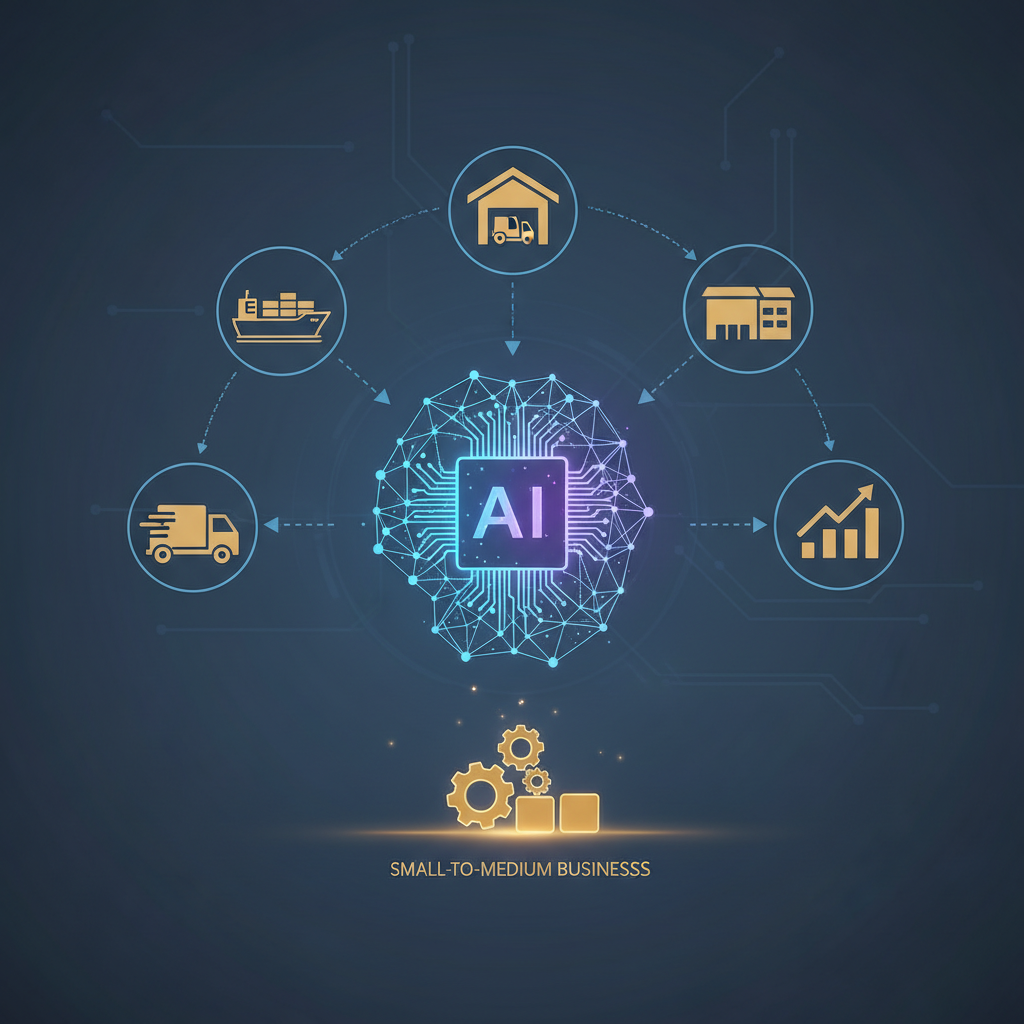
#AI#Supply Chain#SMB#Logistics#Optimization#Technology#Small Business
Key Takeaways
- 📌Introduction
- 📌What Are the Key Logistics Challenges Facing SMBs in 2025?
- 📌How AI is Revolutionizing Supply Chain Management for Small Businesses
- 📌Top AI Technologies for Supply Chain Optimization
- 📌How-To: Implement AI-Powered Strategies to Streamline SMB Logistics
AI-Powered Supply Chain Optimization Strategies for SMBs
Introduction
In 2025, small to medium-sized businesses (SMBs) are facing unprecedented logistics challenges. Rising costs, supply disruptions, and inefficiencies in last-mile delivery are major pain points. This is where AI-powered supply chain optimization strategies can make a significant difference. By integrating AI into their supply chain operations, SMBs can gain a competitive edge through enhanced efficiency and reduced costs. In this guide, we'll explore how AI can revolutionize supply chain management for SMBs, the top AI technologies available, and practical steps for implementation.
AI is not just a buzzword; it's a transformative force that can address the core logistics issues faced by SMBs. From predictive analytics to real-time tracking, AI technologies offer solutions that were once out of reach. As a small business owner, understanding and leveraging these technologies can be the key to thriving in an increasingly complex market. By the end of this article, you'll have a solid understanding of how AI can help optimize your supply chain, providing you with actionable insights to improve your logistics operations.
What Are the Key Logistics Challenges Facing SMBs in 2025?
Inventory Management
Inventory management remains a perennial challenge for SMBs. In 2025, the complexity is exacerbated by fluctuating demand and global supply chain disruptions. Businesses often struggle to maintain optimal stock levels, leading to either stockouts or overstocking. According to recent reports, global supply chain disruptions now cost businesses approximately $1.5 trillion annually. AI-powered predictive analytics can address this issue by offering more accurate demand forecasting. Machine learning models can analyze past sales data, market trends, and external factors to predict demand with an accuracy improvement of 20-50%. This level of precision helps SMBs reduce stockouts and overstock situations, optimizing their inventory levels.
Last-Mile Delivery
Last-mile delivery is another significant hurdle. As e-commerce continues to grow, the pressure on SMBs to provide timely and cost-effective delivery solutions intensifies. AI and IoT integration can play a pivotal role here. For instance, AI can optimize delivery routes using real-time traffic data, while IoT devices can provide updates on the location and condition of packages. This combination can reduce delivery times by up to 30%, enhancing customer satisfaction and loyalty. Companies like Amazon have already set high standards for delivery speed, making it crucial for SMBs to adopt similar technologies to remain competitive.
How AI is Revolutionizing Supply Chain Management for Small Businesses
Predictive Analytics and Automation
AI's ability to process vast amounts of data quickly is revolutionizing supply chain management. Predictive analytics allows businesses to anticipate demand, manage inventory, and optimize logistics routes. Automation further streamlines operations by handling repetitive tasks such as order processing and invoice management. This not only reduces human error but also speeds up operations, leading to cost savings.
Real-Time Visibility and Decision-Making
AI provides real-time visibility into supply chain operations, enabling SMBs to make informed decisions swiftly. With AI-driven dashboards, businesses can monitor key performance indicators such as delivery times, inventory levels, and supplier performance. This real-time insight allows for rapid adjustments to strategies, minimizing disruptions and maximizing efficiency. The ability to react quickly to changes in the supply chain is a game-changer for SMBs, allowing them to stay ahead of the competition.
Top AI Technologies for Supply Chain Optimization
Machine Learning for Demand Forecasting
Machine learning algorithms are at the forefront of demand forecasting. By analyzing historical data and identifying patterns, these algorithms can predict future demand with greater accuracy. For SMBs, this means fewer stockouts and overstock situations, leading to better cash flow management. A study has shown that machine learning can improve demand forecasting accuracy by 20-50%, offering a significant advantage in a competitive market.
IoT Integration for Tracking and Monitoring
The Internet of Things (IoT) continues to transform supply chain management by providing real-time data on the location and condition of goods. IoT devices equipped with sensors can track shipments, monitor temperature and humidity levels, and alert businesses to potential issues before they become major problems. This level of insight allows SMBs to ensure the quality and safety of their products, particularly in industries such as food and pharmaceuticals.
How-To: Implement AI-Powered Strategies to Streamline SMB Logistics
Implementing AI in your supply chain doesn't have to be daunting. Start by assessing your current logistics operations to identify areas where AI can have the most impact. For example, if last-mile delivery is a bottleneck, consider deploying AI-powered route optimization software. This technology can analyze traffic patterns and delivery constraints to determine the most efficient routes, reducing delivery times and costs.
Next, select AI tools that are scalable and integrate easily with your existing systems. Many AI solutions offer APIs that facilitate seamless integration, ensuring a smooth transition without disrupting current operations. Once the tools are in place, focus on training your staff. Provide comprehensive training sessions to ensure your team is comfortable using the new technologies. A well-trained team can leverage AI insights to drive efficiency and improve decision-making.
Finally, continuously monitor the performance of your AI systems. Use analytics to track improvements in key metrics such as delivery times, inventory levels, and customer satisfaction. Regularly reviewing these metrics will help you identify areas for further optimization and ensure that your AI investments are delivering the desired results.
Comparison: AI Tools vs. Traditional Methods for Supply Chain Efficiency
Speed and Accuracy
AI tools offer significant advantages over traditional methods in terms of speed and accuracy. Traditional supply chain processes often rely on manual data entry and analysis, which can be time-consuming and prone to errors. In contrast, AI-powered solutions can process data in real-time, providing insights and recommendations almost instantly. This allows businesses to make informed decisions quickly, reducing the risk of costly mistakes.
Cost Savings
AI tools also offer cost savings that traditional methods cannot match. By automating repetitive tasks and optimizing processes, AI can reduce operational costs by up to 15%. For SMBs operating on tight margins, these savings can make a substantial difference. Additionally, AI's ability to predict demand more accurately can lead to better inventory management, reducing the costs associated with excess stock and stockouts.
Real-World Case Studies of AI Success in SMB Supply Chains
Retailer Reduces Inventory by 35%
A mid-sized retailer implemented AI for inventory optimization, resulting in a 35% reduction in stock levels. This not only freed up capital but also improved order fulfillment speed. The retailer used machine learning algorithms to analyze sales data and forecast demand more accurately, allowing them to maintain optimal inventory levels and reduce excess stock.
Logistics Firm Cuts Delivery Delays by 40%
A logistics firm adopted AI predictive analytics to enhance its delivery operations. By analyzing historical data and real-time information, the firm was able to cut delivery delays by 40% during peak seasons. This improvement in efficiency helped the company meet customer expectations and increase overall satisfaction.
Best Practices for Scaling AI in SMB Logistics Operations
When scaling AI in your logistics operations, start small and focus on ensuring data quality. High-quality data is crucial for AI algorithms to provide accurate insights and recommendations. Partnering with reliable vendors can also be beneficial, as they can provide the expertise and support needed to implement AI solutions effectively.
Continuously monitor the return on investment (ROI) of your AI initiatives to ensure they are delivering value. Regularly reviewing performance metrics and making adjustments as needed will help you maximize the benefits of AI in your supply chain operations.
Frequently Asked Questions
Q1: How can AI-powered supply chain optimization strategies help SMBs?
A: AI strategies can enhance efficiency by providing real-time data insights, improving demand forecasting, and automating processes, leading to cost savings.
Q2: What are the challenges of integrating AI into SMB logistics?
A: Challenges include high initial costs, integration complexity, and the need for ongoing system maintenance and updates.
Q3: How do AI tools compare to traditional supply chain methods?
A: AI tools offer faster decision-making, improved accuracy, and cost savings, outperforming traditional methods in many aspects.
Q4: What are the cost benefits of using AI in supply chains?
A: AI can reduce supply chain costs by up to 15% through improved efficiency and better inventory management.
Q5: How can SMBs ensure successful AI implementation?
A: SMBs should start small, ensure data quality, provide staff training, and partner with experienced vendors for successful AI implementation.
Q6: Is AI suitable for all SMBs, and how can one get started?
A: AI is suitable for most SMBs looking to improve efficiency. Start by assessing needs, selecting appropriate tools, and training staff. Learn more about AI tools in our guide.
Conclusion
AI-powered supply chain optimization strategies offer SMBs a pathway to overcoming logistics challenges in 2025. By harnessing the power of AI, businesses can achieve significant improvements in efficiency, cost savings, and customer satisfaction. As we've explored, AI technologies such as predictive analytics and IoT integration provide SMBs with tools to stay competitive in a rapidly changing market.
To maximize the benefits of AI, SMBs should start small, focus on data quality, and partner with experienced vendors. The long-term advantages of AI, including improved demand forecasting and real-time decision-making, make it a worthwhile investment for any SMB looking to thrive in the logistics landscape.
For more insights on how AI can transform your small business, check out our Beginner Guide to Data Analytics for Small Business Decisions. Embrace AI and revolutionize your supply chain today.
Author: AskSMB Editorial – SMB Operations
📊 Relevant Calculators
Use these free tools to put this advice into action: