EU AI Act Phase 2 Compliance Checklist for SMBs
Explore the EU AI Act Phase 2 compliance checklist for SMBs. Learn how to navigate regulatory requirements, manage risks, and ensure your AI systems are compliant.
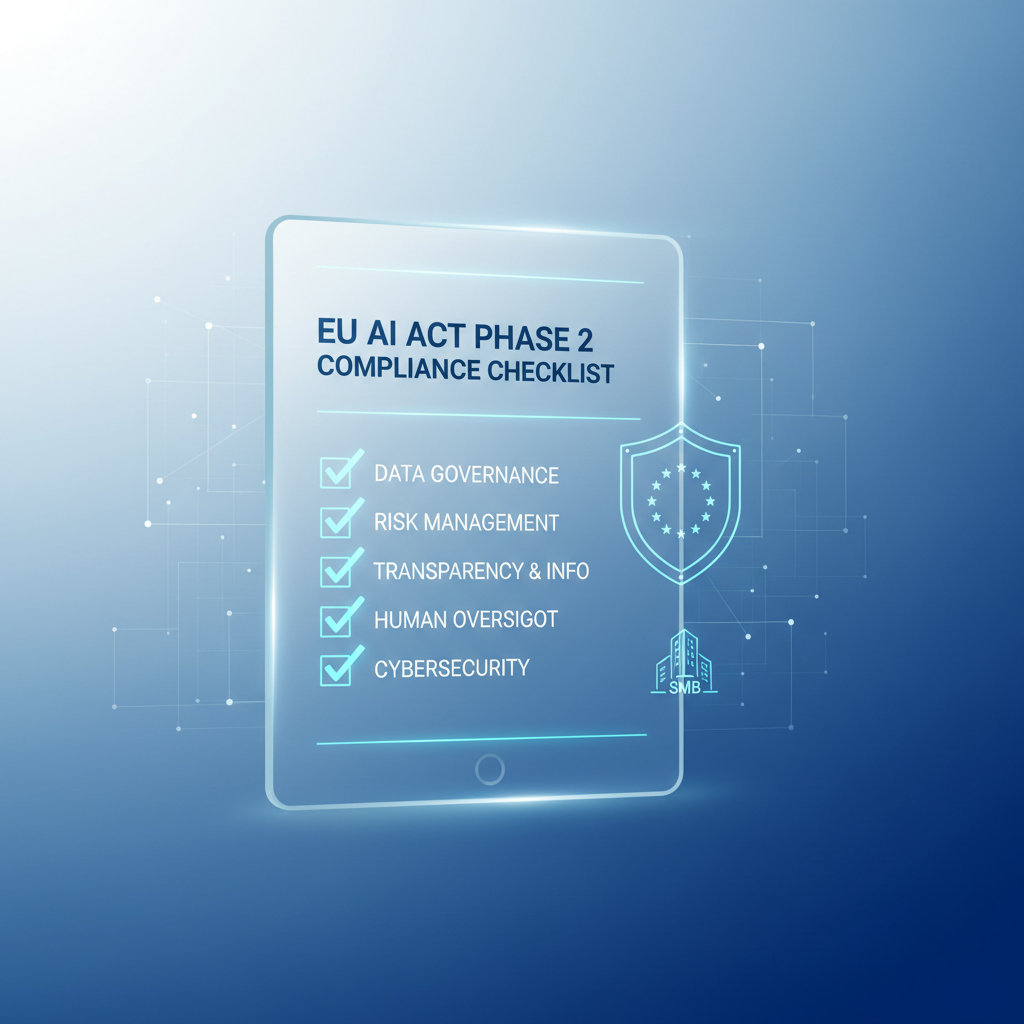
#EU AI Act#Phase 2#SMBs#Compliance#AI Regulation#Checklist#Risk Management
Key Takeaways
- 🤖Understand the EU AI Act: A regulatory framework focusing on safe and ethical AI deployment.
- 🤖Phase 2 Focus: Obligations for general-purpose AI models with transparency and risk management.
- 💰SMB Implications: Increased operational costs by 10-20% due to compliance requirements.
- 🤖AI Risk Classifications: From unacceptable risk to minimal risk categories.
- 🤖Compliance Preparation: Assess AI usage, classify risks, and consult legal experts.
Introduction
Related: Comprehensive Compliance Guides for AI Tools in Healthcare SMBs
The EU AI Act represents a groundbreaking regulatory framework aimed at ensuring the safe and ethical deployment of artificial intelligence across the European Union. With Phase 2 of this Act set to take effect on August 2, 2025, small and medium-sized businesses (SMBs) face new challenges and opportunities as they navigate these complex requirements. A staggering 15% increase in operational costs is anticipated for SMBs due to the need for enhanced documentation and risk management. This guide provides a comprehensive checklist to help your business meet the EU AI Act Phase 2 compliance requirements efficiently.
This matters more than ever as the adoption of AI among EU companies remains low at just 8% AI Adoptio Statistics i EU SMEs. As SMB owners, understanding these regulations is crucial to mitigate risks and leverage AI safely. Throughout this guide, you will learn about the essential steps to ensure your AI systems comply with the EU AI Act Phase 2, from risk assessments to implementing governance frameworks.
Internal links within this article will direct you to related resources, such as strategies for cost-saving and funding options amid rising tariffs, ensuring you have a holistic view of the landscape ahead.
Key Takeaways
- Understand the EU AI Act: A regulatory framework focusing on safe and ethical AI deployment.
- Phase 2 Focus: Obligations for general-purpose AI models with transparency and risk management.
- SMB Implications: Increased operational costs by 10-20% due to compliance requirements.
- AI Risk Classifications: From unacceptable risk to minimal risk categories.
- Compliance Preparation: Assess AI usage, classify risks, and consult legal experts.
- Checklist for Implementation: Steps include conducting AI audits, classifying systems, and staff training.
Expert Tip
As SMBs gear up for Phase 2 compliance, two critical areas demand attention: documentation and risk management. Start by conducting a thorough audit of your existing AI systems. This involves inventorying all AI applications within your business and classifying them based on risk levels as outlined in the EU AI Act. For instance, a German manufacturing SMB classified its predictive maintenance AI as high-risk, implementing conformity assessments well ahead of Phase 2. This proactive approach helped them achieve compliance six months early, avoiding potential fines.
Next, leverage technology to streamline documentation. Automated tools can significantly reduce the time and resources required for documentation. A mid-sized EU software firm adapted its chatbot AI to meet Phase 2 transparency rules, cutting deployment time by integrating automated documentation tools, resulting in a 20% faster market entry.
By focusing on these areas, your SMB can not only ensure compliance but also gain a competitive edge in the market.
What is the EU AI Act and Phase 2 Overview
Understanding the EU AI Act
The EU AI Act is a pioneering effort by the European Union to regulate artificial intelligence comprehensively. It aims to ensure that AI systems are safe, respect fundamental rights, and are trustworthy. The Act is structured to address AI's potential risks while fostering innovation and competitiveness within Europe.
The legislation introduces a classification system that defines AI systems based on their risk levels. It covers everything from high-risk applications, such as biometric identification systems, to minimal-risk applications like email filters. This framework is designed to be flexible and future-proof, accommodating the fast-paced evolution of AI technologies.
Phase 2 Overview
Phase 2 of the EU AI Act is crucial for SMBs as it focuses on general-purpose AI models. Effective from August 2, 2025, this phase mandates transparency and risk management obligations. For SMBs, this means implementing governance frameworks, conducting risk assessments, and ensuring compliance with codes of practice.
One of the significant challenges for SMBs is the need to document and manage AI risks effectively. This phase also emphasizes the importance of transparency in AI operations, requiring businesses to maintain detailed records of their AI systems' functionalities and decisions. The estimated compliance cost increase for SMBs is around 15% due to these additional requirements The EU AI Act: Implications for Business.
Key Implications of Phase 2 for Small and Medium Businesses
Increased Operational Costs
One of the most immediate implications of Phase 2 compliance is the increase in operational costs for SMBs. The need for enhanced documentation and risk management practices means that businesses must allocate additional resources to these areas. The anticipated cost increase is about 10-20%, which could strain the budgets of smaller enterprises.
To manage these costs, SMBs can explore various strategies, such as leveraging open-source tools and partnering with compliance experts. These approaches can help mitigate costs while ensuring that your business meets all regulatory requirements.
Mandatory Documentation and Risk Assessments
Phase 2 mandates that SMBs maintain comprehensive documentation of their AI systems. This includes detailed records of AI functionalities, decision-making processes, and risk assessments. Failing to comply with these requirements could result in significant penalties, with fines reaching up to 35 million euros for high-risk violations EU AI Act: first regulation on artificial intelligence.
To effectively manage this requirement, SMBs should establish a documentation framework that captures all relevant information about their AI systems. This framework should be dynamic, allowing for updates as AI systems evolve. Additionally, regular risk assessments should be conducted to identify potential issues and mitigate them proactively.
Understanding AI Risk Classifications Under the EU AI Act
AI Risk Categories
The EU AI Act classifies AI systems into four main risk categories: unacceptable risk, high risk, limited risk, and minimal risk. This classification helps businesses understand the level of regulatory scrutiny they will face and tailor their compliance efforts accordingly.
- Unacceptable Risk: These AI systems are banned under the Act. They include applications that manipulate human behavior or exploit vulnerabilities.
- High Risk: These systems require strict compliance measures, including conformity assessments and CE marking. Examples include AI used in critical infrastructure and biometric identification.
- Limited Risk: These systems require transparency measures but are subject to less stringent requirements.
- Minimal Risk: These AI applications pose little to no risk and are subject to minimal regulatory oversight.
Preparing for Phase 2 Compliance
SMBs must first inventory their AI systems to classify them according to these risk categories. This involves evaluating the potential impact and likelihood of harm associated with each AI application. Consulting legal experts or compliance professionals can provide valuable insights into accurately classifying and managing these risks.
Once classified, SMBs should prioritize high-risk systems for compliance, ensuring that all necessary documentation and risk assessments are in place. Limited risk and minimal risk systems should also be reviewed to ensure they meet transparency requirements.
How to Assess and Prepare Your SMB for Phase 2 Compliance
Conducting an AI Audit
An AI audit is a crucial first step in preparing for Phase 2 compliance. This involves a comprehensive review of all AI systems within your organization to identify potential compliance gaps. The audit should cover all aspects of AI usage, from data collection and processing to decision-making and output.
During the audit, pay close attention to high-risk AI systems, as these will require the most stringent compliance measures. Document all findings and use them to develop a compliance roadmap tailored to your business's specific needs.
Implementing Governance Frameworks
Effective governance is essential for managing AI risks and ensuring compliance with the EU AI Act. This involves establishing policies and procedures that guide AI development, deployment, and monitoring. Governance frameworks should include mechanisms for accountability, transparency, and risk management.
For SMBs, implementing a governance framework may involve appointing a dedicated compliance officer or team responsible for overseeing AI activities. This team should be equipped with the necessary tools and resources to monitor and manage AI risks effectively.
Step-by-Step Checklist for EU AI Act Phase 2 Implementation
Step 1: Conduct an AI Audit
Begin by conducting a thorough audit of all AI systems within your organization. This will help identify compliance gaps and prioritize areas for improvement.
Step 2: Classify AI Systems
Classify your AI systems based on the risk categories outlined in the EU AI Act. Focus on high-risk systems, as these will require the most stringent compliance measures.
Step 3: Implement Governance Frameworks
Establish governance frameworks that guide AI development, deployment, and monitoring. These should include mechanisms for accountability, transparency, and risk management.
Step 4: Train Staff
Related: Best Budgeting Questions for SMBs Facing Inflation Pressures
Ensure that all staff involved in AI operations are trained on compliance requirements and best practices. This will help foster a culture of compliance and accountability within your organization.
Step 5: Monitor and Report
Regularly monitor AI systems to ensure ongoing compliance with the EU AI Act. Implement reporting mechanisms that allow for timely identification and resolution of compliance issues.
Step 6: Consult Experts
Consider consulting legal experts or compliance professionals to ensure your business meets all regulatory requirements. External guidance can provide valuable insights and help mitigate potential risks.
Comparison: High-Risk vs. General-Purpose AI Systems in Phase 2
High-Risk AI Systems
High-risk AI systems are subject to the most stringent compliance requirements under the EU AI Act. These systems include applications used in critical infrastructure, biometric identification, and other areas where AI could significantly impact safety and fundamental rights.
Compliance measures for high-risk systems include conformity assessments, CE marking, and detailed documentation. SMBs using high-risk AI must ensure that all necessary measures are in place to avoid significant penalties.
General-Purpose AI Systems
General-purpose AI systems, such as those used for content recommendations or chatbots, are also subject to compliance requirements under Phase 2. However, these requirements focus more on transparency and risk management rather than strict conformity assessments.
SMBs using general-purpose AI should focus on maintaining detailed records of AI functionalities and decision-making processes. This will help ensure compliance with transparency requirements and avoid potential legal issues.
Overcoming Common Compliance Challenges for SMBs
Resource Limitations
One of the most significant challenges for SMBs is the lack of resources to manage compliance effectively. Many SMBs operate on tight budgets and may not have the capacity to hire dedicated compliance staff.
To overcome this challenge, consider leveraging open-source tools and software that can automate compliance tasks. Partnering with compliance experts or consultants can also provide valuable support without the need for additional full-time staff.
Lack of Expertise
SMBs may also struggle with a lack of expertise in navigating the complex regulatory landscape of the EU AI Act. This can make it challenging to understand and implement compliance requirements effectively.
To address this issue, invest in training for key staff members involved in AI operations. This can include workshops, online courses, and seminars focused on AI compliance and risk management. Additionally, consider joining industry associations or networks that provide resources and support for compliance efforts.
Pros and Cons
| Pros | Cons |
|---|---|
| ✅ Ensures safe and ethical AI deployment | ❌ Increases operational costs by 10-20% |
| ✅ Enhances transparency and accountability | ❌ Requires comprehensive documentation |
| ✅ Reduces risk of legal issues and penalties | ❌ Demands significant time and resource investment |
| ✅ Fosters innovation within regulatory frameworks | ❌ May limit flexibility in AI development |
| ✅ Builds trust with customers and stakeholders | ❌ Complex compliance requirements |
While the EU AI Act Phase 2 compliance presents several challenges for SMBs, it also offers numerous benefits. By ensuring safe and ethical AI deployment, SMBs can build trust with customers and stakeholders, reducing the risk of legal issues and penalties. However, the increased operational costs and resource demands may strain smaller businesses. To balance these challenges, SMBs should focus on leveraging technology and partnerships to streamline compliance processes.
Implementation Checklist
- Conduct an AI Audit: Thoroughly review all AI systems to identify compliance gaps.
- Classify AI Systems: Categorize AI systems based on risk levels outlined in the EU AI Act.
- Implement Governance Frameworks: Establish policies and procedures for AI development and monitoring.
- Train Staff: Ensure all staff involved in AI operations are trained on compliance requirements.
- Monitor and Report: Regularly monitor AI systems and implement reporting mechanisms.
- Consult Experts: Seek external guidance from legal experts or compliance professionals.
Related: How to Integrate AI Chatbots into SMB CRM Systems for Better Efficiency
- Leverage Technology: Use open-source tools to automate compliance tasks and reduce resource demands.
- Review and Update: Continuously review and update compliance measures as AI systems evolve.
- Engage Stakeholders: Communicate compliance efforts to stakeholders to build trust and transparency.
Frequently Asked Questions
Q1: What is the EU AI Act Phase 2 compliance for SMBs checklist?
A: The EU AI Act Phase 2 compliance checklist for SMBs includes steps like conducting an AI audit, classifying AI systems based on risk, implementing governance frameworks, training staff, and monitoring AI operations to ensure alignment with regulatory requirements.
Q2: Does the EU AI Act apply to non-EU SMBs?
A: Yes, the EU AI Act applies to non-EU SMBs if they provide AI systems or services within the EU. Non-EU businesses must ensure their AI systems comply with EU regulations to avoid penalties and maintain market access.
Q3: What are the penalties for non-compliance with the EU AI Act?
A: Penalties for non-compliance with the EU AI Act can reach up to 35 million euros for high-risk violations. SMBs must prioritize compliance to avoid these significant fines and ensure AI systems meet all regulatory standards.
Q4: How can SMBs manage increased compliance costs?
A: SMBs can manage increased compliance costs by leveraging open-source tools, partnering with compliance experts, and automating documentation processes. These strategies can help reduce resource demands and streamline compliance efforts.
Q5: Why is transparency important in AI compliance?
A: Transparency is crucial in AI compliance as it ensures accountability and builds trust with customers and stakeholders. By maintaining detailed records of AI functionalities and decision-making processes, SMBs can meet transparency requirements and avoid legal issues.
Q6: Where can I find resources for EU AI Act compliance?
A: For resources on EU AI Act compliance, visit the EU AI Act official page or consult with industry associations and compliance experts for guidance and support.
Sources & Further Reading
- EU AI Act: first regulation on artificial intelligence: Overview of the EU AI Act and its implications.
- The EU AI Act: Implications for Business: Insights into compliance requirements and cost implications for businesses.
- AI Adoptio Statistics i EU SMEs: Statistics on AI adoption and compliance preparation needs.
- IBM Isights o EU AI Act Compliace: Expert analysis on navigating EU AI Act compliance challenges.
- FAQs: EU AI Act fo Small Busiesses: Comprehensive FAQ resource for small business compliance questions.
Conclusion
In summary, the EU AI Act Phase 2 presents both challenges and opportunities for SMBs aiming to leverage AI technologies in compliance with regulatory standards. Key points to remember include understanding the risk classification of AI systems, implementing governance frameworks, and leveraging technology to streamline compliance processes. These measures not only ensure regulatory compliance but also foster trust and innovation within your business.
Related: Cost-Saving Strategies for SMB Financial Resilience in 2024
While the anticipated increase in operational costs may pose a challenge, the benefits of compliance—such as reduced legal risks and enhanced customer trust—are significant. As you prepare for Phase 2, consider exploring related resources on Cost-Saving Strategies for SMB Financial Resilience in 2024 and Best Budgeting Questions for SMBs Facing Inflation Pressures to help manage financial implications.
For further guidance, internal links within this article provide access to additional resources on AI integration and compliance strategies. By taking proactive steps and leveraging available resources, your SMB can navigate the EU AI Act Phase 2 landscape effectively and emerge as a leader in ethical AI deployment.
Author: AskSMB Editorial – SMB Operations