How SMBs Can Budget for AI Adoption Amid Rising Inflation
Discover how small and medium-sized businesses (SMBs) can effectively budget for AI adoption amid rising inflation. This guide explores practical strategies, cost considerations, and real-world success stories to optimize AI investments.
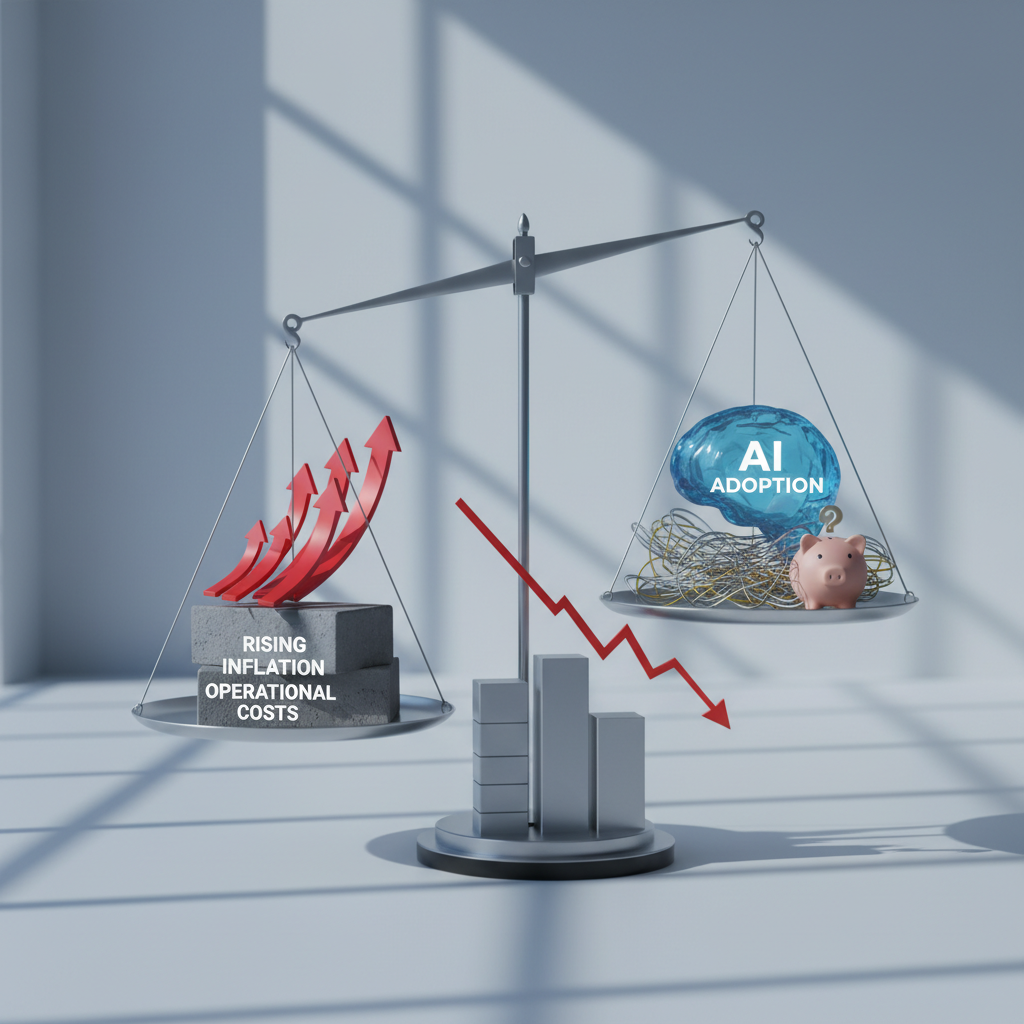
#AI adoption#small business#inflation#budgeting#technology investment#cost management#ROI
Key Takeaways
- 📌Why AI Adoption Matters for SMBs in 2025
- 📌The Impact of Rising Inflation on Business Tech Budgets
- 📌Breaking Down the True Costs of AI for Small Businesses
- 📌How to Create a Realistic AI Budget for Your SMB
- 📌Free vs Paid AI Tools: A Cost Comparison for SMBs
Introduction

Why AI Adoption Matters for SMBs in 2025
Enhancing Efficiency and Competitiveness
In 2025, AI is set to become a cornerstone of business operations, especially for SMBs seeking to enhance efficiency and competitiveness. AI technologies can automate routine tasks, freeing up employees to focus on more strategic activities. For instance, implementing AI-driven customer support can reduce response times by 35%, as demonstrated by a 20-employee marketing firm that integrated chatbots into their customer service process. This not only improves customer satisfaction but also allows the business to operate more efficiently with the same or fewer resources.
Driving Innovation Amid Economic Challenges
Economic pressures often force businesses to innovate or risk falling behind. AI provides SMBs with the tools needed to innovate by offering insights through data analytics, predicting market trends, and optimizing business processes. A consulting firm that allocated 8% of its budget to AI training saw a 40% productivity gain, showcasing how strategic investment in AI can result in significant business growth even during challenging economic times.
The Impact of Rising Inflation on Business Tech Budgets
Increased Operational Costs
Rising inflation has a direct impact on business tech budgets, with operational costs for software and hardware increasing by 15% since 2026. This presents a significant challenge for SMBs that must prioritize spending on technology to remain competitive. As inflation-adjusted tech budgets for SMBs have decreased by 10% in 2026, businesses need to be strategic about their investments, focusing on solutions that offer the best return on investment (ROI).
Prioritizing High-ROI Investments
With tech budgets under pressure, SMBs must prioritize investments that deliver the highest ROI. AI adoption is a prime candidate, as it can significantly enhance operational efficiency and drive down costs. For instance, AI automation has been shown to reduce operational costs by 30% in sectors hit hard by inflation, such as retail and services. By focusing on high-ROI investments, SMBs can better manage their finances and continue to innovate even as inflation rises.
Breaking Down the True Costs of AI for Small Businesses
Software and Hardware Expenses
The true costs of AI adoption for SMBs include a variety of components, starting with software and hardware expenses. AI software subscriptions can range from $20 to $500 per month, depending on the complexity and scalability required. Additionally, hardware upgrades may be necessary to support more advanced AI applications, adding to the overall cost. A typical SMB might spend $10,000 to $50,000 annually on these components alone.
Training and Integration Costs
Another significant cost associated with AI adoption is training and integration. Employees need to be trained to work effectively with new AI tools, which can involve workshops, courses, and on-the-job training. Integration costs include the time and resources needed to implement AI solutions into existing systems and processes. These costs can vary widely but are essential for ensuring that AI investments deliver the expected benefits. For example, a manufacturing SMB piloted AI predictive maintenance with a $10K budget, avoiding $50K in downtime losses due to proper training and integration.
How to Create a Realistic AI Budget for Your SMB
Assessing Needs and Setting Priorities
Creating a realistic AI budget starts with assessing your business needs and setting clear priorities. Determine which areas of your business can benefit most from AI and prioritize these for investment. This requires a thorough understanding of your current operations and future goals. For instance, an e-commerce SMB looking to improve marketing efficiency might prioritize AI-driven analytics tools to better understand customer behavior and preferences.
Starting Small with Pilot Projects
Before making large-scale investments in AI, consider starting with small pilot projects. This allows you to test the effectiveness of AI solutions and make adjustments before committing significant resources. Pilot projects can provide valuable insights into how AI can be integrated into your business processes and what kind of ROI you can expect. By starting small, you can minimize risks and ensure that your AI budget is aligned with your business strategy.
Free vs Paid AI Tools: A Cost Comparison for SMBs
Free AI Tools
Many SMBs begin their AI journey with free tools to minimize costs. Free tools like ChatGPT offer basic functionalities, such as text generation and simple data analysis, which can be useful for businesses just starting with AI. However, these tools often lack the customization and scalability needed for more complex applications. According to IBM, 60% of SMBs use free AI tools, but only 25% scale to paid solutions as their needs grow.
Paid AI Solutions
Paid AI solutions, on the other hand, offer greater scalability, customization, and support. Google Cloud AI, for example, provides a suite of tools that can be tailored to specific business needs, with pricing ranging from $20 to $500 per month. While the upfront cost is higher than free tools, the potential benefits in terms of improved efficiency and productivity can outweigh these costs. A retail SMB that transitioned from free AI analytics tools to a paid solution saw a 25% sales uplift, demonstrating the value of investing in more advanced AI capabilities.
Proven Strategies to Maximize AI ROI During Inflation
Phased Implementation
To maximize AI ROI during inflation, consider a phased implementation approach. This involves gradually integrating AI solutions into your business processes, starting with areas that offer the most immediate benefits. By taking a phased approach, you can manage costs more effectively and ensure that each stage of implementation delivers measurable results before moving on to the next.
Employee Upskilling and Open-Source Alternatives
Investing in employee upskilling is another strategy to maximize AI ROI. Training employees to work with AI tools can lead to significant productivity gains, as demonstrated by a consulting firm that saw a 40% boost in productivity following AI training. Additionally, leveraging open-source AI alternatives can reduce costs while still providing access to powerful AI capabilities. By combining these strategies, SMBs can achieve substantial cost savings and efficiency improvements even amid rising inflation.
Real-World Case Studies: SMBs Thriving with Smart AI Budgeting
Case Study 1: Marketing Firm
A marketing firm with 20 employees implemented AI chatbots with an initial budget of $5,000. The result was a 35% improvement in customer response efficiency, demonstrating how targeted AI investments can enhance business operations without significant upfront costs. This case highlights the importance of starting small and focusing on areas where AI can have the most immediate impact.
Case Study 2: Retail SMB
A retail SMB adopted free AI analytics tools during a period of rising inflation, eventually transitioning to a paid solution costing $15,000 annually. This strategic move resulted in a 25% increase in sales, illustrating the potential for AI to drive revenue growth even in challenging economic conditions. By initially using free tools to understand their needs, the business was able to make informed investments in paid solutions that delivered substantial returns.
Frequently Asked Questions
Q1: How can SMBs budget for AI adoption amid rising inflation?
A: SMBs can budget for AI adoption by assessing their business needs, starting with small pilot projects, and allocating 5-10% of their total budget to technology investments. Leveraging free AI tools and gradually transitioning to paid solutions can also help manage costs.
Q2: What are the true costs of AI adoption for small businesses?
A: The true costs of AI adoption include software subscriptions, hardware upgrades, training, and integration. These can range from $10,000 to $50,000 annually, depending on the size of the business and the complexity of the AI solutions implemented.
Q3: How can SMBs maximize AI ROI during inflation?
A: SMBs can maximize AI ROI by implementing AI solutions in phases, investing in employee upskilling, and leveraging open-source alternatives. These strategies can help reduce costs and improve efficiency, even amid rising inflation.
Q4: Are free AI tools sufficient for small businesses?
A: Free AI tools can offer basic functionality and are a good starting point for SMBs. However, they may lack the customization and scalability needed for more advanced applications. As business needs grow, transitioning to paid solutions can provide greater value.
Q5: What are the risks of AI adoption for SMBs?
A: Risks of AI adoption include high initial setup costs, ongoing training and integration requirements, potential over-reliance on AI, and data security concerns. SMBs should carefully assess these risks and develop strategies to mitigate them.
Q6: How long does it take to see ROI from AI investments?
A: Many SMBs report seeing ROI from AI investments within 6-12 months. By focusing on high-impact areas and monitoring performance, businesses can optimize their AI investments for maximum return. Learn more about AI Tools for Small Business Financial Forecasting in 2025.
Conclusion
the question of how SMBs can budget for AI adoption amid rising inflation is addressed through a strategic approach that emphasizes efficiency, innovation, and ROI. By prioritizing high-impact areas, starting small, and leveraging both free and paid AI tools, SMBs can navigate financial challenges and remain competitive. The key is to continuously assess and adjust your AI investments, ensuring they align with your business goals and the economic landscape. For further insights, explore our resources on How to Use AI Tools to Improve Small Business Productivity. This guide, authored by the AskSMB Editorial team, aims to empower SMBs with the knowledge needed to make informed decisions about AI adoption. Whether you're just starting your AI journey or looking to optimize your existing investments, remember that strategic planning and execution are crucial to achieving success in today's dynamic business environment.
📊 Relevant Calculators
Use these free tools to put this advice into action: